
What do you want to learn?
Find an idea. Make it your own in WiseTom.

How your course is built
-
Type what you want to learn
One sentence about what you want to be able to do and where. Any starting point below will do, as written or changed.
-
Answer a few setup questions
WiseTom asks about your situation so Lesson 1 opens on it and the examples use your role.
-
See the whole path, then open Lesson 1
The full course is laid out before you start. Read it or play the audio, and finishing a lesson unlocks the next.
Find a course
Showing all 301 courses.
Work & ambitions
Communication
19 courses

Difficult conversations at work
Name the real issue, lower the drama, and leave the conversation with an owner, decision, or next step.

Giving feedback that lands
Make feedback specific, useful, and easier for a teammate to act on without burying the point.

Running effective meetings
Turn meetings into decisions, owners, and next steps instead of another hour of context sharing.

Speaking articulately
Organize your point under pressure so updates, questions, and explanations sound clear without sounding rehearsed.

Writing strategy docs
Write strategy docs that clarify the problem, tradeoffs, decision, and operating plan before alignment theater starts.
Speak with confidence
State your recommendation, give a relevant reason and include any uncertainty that affects the decision.
Handle hard conversations
Name the issue and its effect without blame language or a long run-up.

Tell stories people remember
Identify the change that explains your point, without assuming what every listener will remember.

Listen beyond the words
Separate the topic from what the person actually needs from you.

Disagree without an argument
Say what you see and why, without framing it as their error.

Think faster in conversations
Check the question and explain when you need a moment or a source.

Get over the fear of public speaking
Describe your experience without treating nervousness as a judgment of your ability.

Make small talk that goes somewhere
Open with what is in front of you both, and stop needing a clever line.

Explain things so people get it
Learn what the listener already knows before you begin.

Handle questions during a presentation
Separate what was asked from what was said, and check when unsure.

Give a short speech for an occasion
Choose a single true idea about the person and build everything around it.

Write work emails people act on
State the request, the owner and the deadline before the background.

Be assertive without being aggressive
Say what you want, and by when, in one or two sentences.

Apologize in a way that repairs things
Name what you did and its effect without hedging.
Work & ambitions
Leadership
12 courses
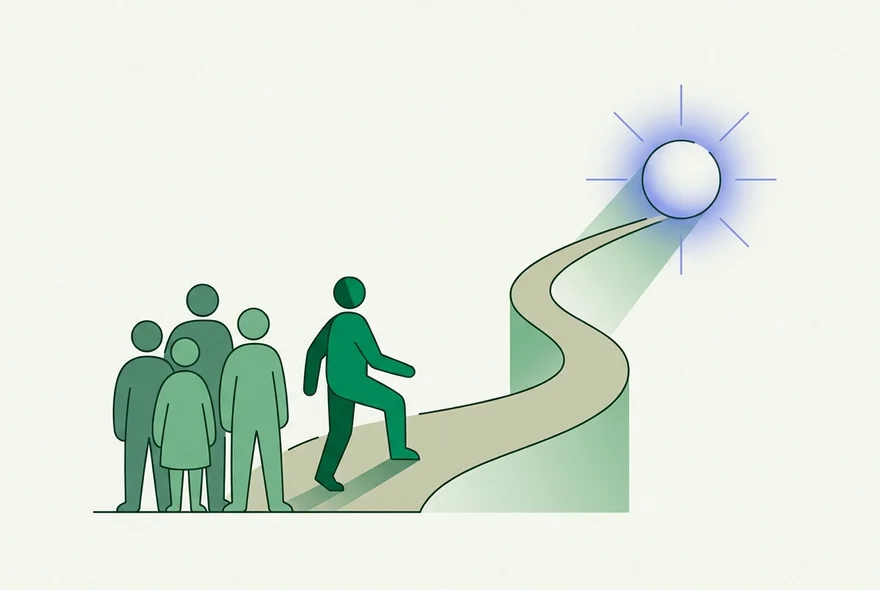
Becoming a first-time manager
Shift from doing the work yourself to setting context, inspecting quality, and helping other people succeed.

One-on-ones that work
Use one-on-ones to surface friction, coach decisions, and keep expectations current instead of filling the slot.

Lead a team for the first time
Say what good looks like, for the work and for how the team runs, early and specifically.

Delegate without hovering
Separate what only you can do from what you are keeping out of habit.

Give feedback that helps
Describe what you observed and its effect, and allow for correction or missing context.

Motivate different people
Learn to ask, and to notice, what drives each person: mastery, autonomy, recognition, security, purpose.

Lead through uncertainty
Say what is known, what is not, and when you will know more, in a way that steadies rather than alarms.

Lead with empathy without going soft
Notice what is behind performance, without prying.
Coach someone instead of telling them
Help someone think through a problem so the next one needs you less.

Manage people who used to be my peers
Hold a first one-to-one with each person that acknowledges what has changed.

Handle an underperforming team member
Distinguish ability, unclear expectations, workload and behavior as causes.

Lead a remote team well
Record priorities and decisions somewhere the whole team can find them.
Work & ambitions
Career growth
16 courses

Land your next role
Focus your search, turn real work into proof, and build an application and interview kit for one target role.

Getting promoted from IC to senior
Show senior-level judgment through scope, ownership, communication, and visible leverage instead of hoping good work speaks for itself.
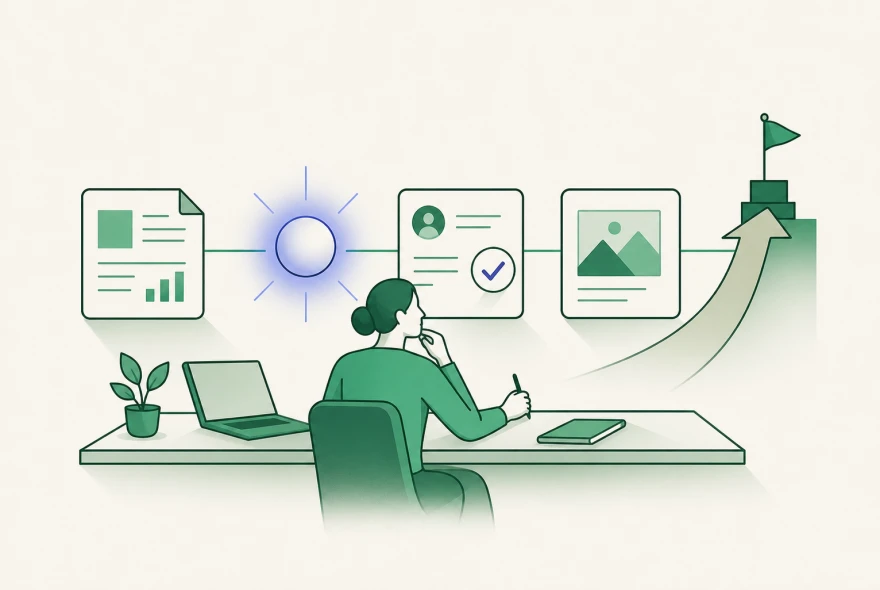
AI skills for career growth
Redesign one workflow with AI, keep human decisions clear, measure what changes, and turn the work into credible career evidence.
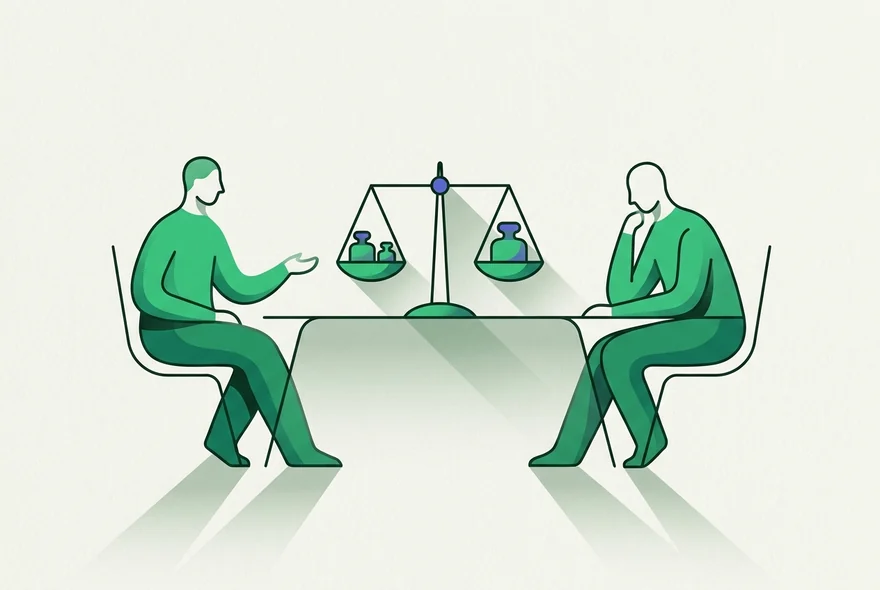
Negotiating offers
Prepare tradeoffs, ranges, timing, and language for salary, scope, title, and career-outcome conversations.

Negotiate a higher salary
Turn what you have delivered into a short, evidence-backed argument.
Prepare for my next role
Know the decisions, scope and judgment it demands, not just its title.

Make my work visible
Describe outcomes and decisions in a way that helps the reader, which is why it does not sound like bragging.

Explore a career change
Separate the job, the setting and the life around it, and find where the mismatch really sits.
Tell my story in interviews
Build a story bank that covers most questions with a handful of real situations.

Write a resume that gets interviews
Tailor what you include to what this job needs.

Write a cover letter someone will read
Show that you understand what they need and why it interests you.

Start a new job well
Find out how decisions get made and work gets done, not how the handbook says.

Finish what I start
See why novelty fades and difficulty arrives at the same time.

Ask for a promotion
Find out what the next level actually requires where you work.

Network without feeling fake
Open with a question about something you share in the room.

Leave a job on good terms
Check your notice terms, tell your manager, then confirm in writing.
Work & ambitions
Productivity
13 courses

Deep work in a meeting-heavy job
Protect meaningful work blocks without pretending meetings, Slack, and team obligations will disappear.
Calendar as a tool
Use your calendar to make tradeoffs, energy, deadlines, and recovery visible instead of just storing meetings.

Habit systems that stick
Design cues, friction, rewards, and review loops so a habit survives normal weeks instead of ideal weeks.

Stop putting things off
Identify what is known and what needs checking about an unfinished task.
Focus in a distracted world
Choose a concrete output and suitable duration.

When everything feels urgent
Tell urgent from important in the moment, not in a quarterly review.
Build habits that last
Describe one action, the situation that will cue it and what you need ready.
Plan a week I can actually do
Account for meetings, energy and interruptions before adding the work.

Get organized for good
Stop relying on memory for commitments.

Focus while working from home
Choose start, work and finish arrangements that fit your actual responsibilities.

Manage my time when every day is full
Keep a short time log and spot the biggest leaks.

Tame my email inbox
Unsubscribe from and filter what you never needed.

Become a morning person
Know how light, timing and routine affect when you feel sleepy and alert.
Work & ambitions
Decision-making
15 courses
Prioritization under uncertainty
Choose the next move when the data is incomplete, stakeholders disagree, and everything sounds important.

Mental models for operators
Use practical decision tools for incentives, bottlenecks, second-order effects, and reversible moves.

Data literacy for non-analysts
Read workplace metrics, question weak evidence, explain uncertainty, and recommend a next step without learning SQL.

Game theory at work
Read incentives, repeated interactions, credible commitments, and negotiation dynamics in everyday work.
Make decisions with less doubt
Name the few things that matter in this decision before comparing options.

Spot my thinking biases
Anchoring, confirmation, availability and the rest, spotted in your decisions rather than in examples.

Think clearly about risk
Weigh how likely something is against how much it would matter.

Solve the right problem
Trace what you can see back to what is producing it.

Judge claims more carefully
Separate the claim from its support, and rate the support.

Stop overthinking everything
State what you know without treating guesses as facts.

Think more logically
Identify claims, reasons and the links between them.

Think clearly under pressure
Identify what must be decided and what can wait.

Stop being indecisive
Judge the stakes and how reversible a choice is before deciding how long to spend on it.

Make a big life decision well
Turn vague feelings into a short list of values and needs the choice must serve.

Think for myself
Trace a view back to the source and evidence behind it.
Work & ambitions
Work relationships
12 courses

Managing up
Give your manager better context, clearer asks, and cleaner tradeoffs so decisions do not stall above you.

Build trust with colleagues
Find out how the team actually works before you act on how you assume it does.
Work well with my manager
Get an explicit answer on what matters most, and revisit it when things change.

Navigate workplace tension
Describe the observed friction and ask for the context needed to understand it.

Influence without authority
Know what the other side is measured on and worried about.

Understand workplace dynamics
Identify formal responsibilities and sources of advice, keeping speculation separate.

Deal with difficult people at work
Describe the conduct, ask for relevant context and avoid assuming a motive.

Work with a micromanager
Use observable requests and agreements rather than a diagnosis.

Recognize unconscious bias at work
Identify the moments in a decision where shortcuts take over.

Handle a colleague who takes credit
Distinguish deliberate credit-taking from loose wording or genuinely shared work.

Make friends at work
See why repeated, low-pressure contact matters more than one big effort.

Say no at work without damaging relationships
Check a request against your priorities and capacity before answering.
Work & ambitions
Business
15 courses

Business fundamentals
Build practical judgment around customers, value, pricing, margin, cash, and the operating rhythm of a real business.

Becoming a founder from zero to one
Move from idea to sharper founder behavior: customer evidence, offer tests, constraints, and early operating rhythm.

Talking to users
Ask better customer-discovery questions, avoid accidental pitching, and turn conversations into evidence you can use.
Understand how businesses work
Trace the money from customer to profit for companies you use.
Test a business idea
Identify what has to be true for the idea to work, and which of those you do not know.

Read the story in the numbers
Know what each one answers and what it hides.

Think strategically
Tell a coherent set of choices from a list of hopes.

Understand pricing and value
Start from what the buyer gains and compares against.

Understand economics in everyday life
See supply, demand and bargaining power in things you pay and are paid.
Find a business idea worth testing
Stop waiting for inspiration and start looking at problems.

Negotiate everyday deals
Know your alternatives, their pressures and your number before you talk.

Handle objections in a sales conversation
Clarify the stated concern without assuming a hidden motive.

Write a business plan that is actually useful
Match a one-page or detailed plan to who will read it and why.

Understand marketing basics
Describe one specific group of buyers and what they care about.

Get my first customers
Identify who feels the problem most and where you can reach them.
Work & ambitions
AI & technology
11 courses
AI for everyday work
Turn recurring work into a safe, repeatable AI workflow while keeping accuracy, privacy, and judgment in your hands.

Understand AI without the jargon
Describe pattern learning from data in plain words, without math.

Ask AI better questions
State the goal, the context and what good looks like.

Know when to trust an AI answer
Identify claims whose error would materially affect your decision.

Understand digital privacy
Describe cookies, identifiers and data brokers in plain terms.

Make sense of AI at work
See your work as a set of activities rather than a job title.

Spot scams before they get you
Recognize common warning signs without treating them as an exhaustive list.

Understand how AI agents and automation work
Describe what an agent is, how it differs from a chat assistant, and what it can do.

Understand how the internet works
Explain the steps from typing an address to seeing the page.

Spot deepfakes and AI fakes
Understand in plain terms what AI tools can generate and imitate.

Protect my accounts from hackers
Understand reused passwords, phishing and leaked data in plain terms.
Life & growth
Confidence
13 courses

Ambition without burnout
Keep high standards while managing load, recovery, boundaries, and the warning signs that effort is becoming brittle.

Quiet my inner critic
Tell the part of the voice that has a point from the part that only has a tone.

Speak up even when nervous
Reduce what you want to say to something short enough to survive nerves.

Bounce back from mistakes
Identify the people affected, the repair needed and any reporting duty.

Handle impostor feelings
Distinguish a feeling of inadequacy from evidence about a specific skill.

Set boundaries without guilt
Know what you can actually give before the request arrives.

Stop caring so much what people think
See why other people's opinions feel so important and what it costs.

Take criticism without falling apart
Hear the whole thing without preparing a defense.

Get over the fear of rejection
See rejection as a social alarm, not a judgment.

Stop being a people pleaser
Explore possible motives without assigning one explanation to every yes.

Stop comparing myself to others
Notice when a comparison has started and what set it off.

Build self-esteem that holds
See how avoidance and harsh self-judgment keep low self-esteem in place.

Stop over-apologizing
Tell an apology for harm from one used to soften a request.
Life & growth
Personal finance
12 courses

Investing without the jargon
Say in your own words what diversification, fees and time horizon do.

Build a budget that fits my life
Know where money goes without judging every coffee.

Understand debt and interest
See why balances grow the way they do and what a rate actually means.

Understand my money habits
Notice the moments and moods that lead to spending you regret.

Make sense of financial risk
Tell inflation risk from volatility from the risk of losing everything.

Save money without feeling deprived
Find the real pattern in your spending with minimal tracking.

Plan for retirement without panicking
See how contributions, growth and time combine.

Understand credit scores and borrowing power
Understand common factors and why model weights differ.

Manage money as a couple
See where your approaches came from and what they protect.

Build an emergency fund
Base a first goal on your real past surprises and essential costs.

Understand insurance before I buy it
See how many people's premiums pay for the few who claim.

Prepare to buy a first home
Set a monthly housing figure you are comfortable with, not only what a lender offers.
Life & growth
Wellbeing
12 courses

Understand what supports happiness
Know which wellbeing claims have research behind them and how strong it is.

Handle everyday stress
Notice changes and describe them without assuming their cause.

Build a healthier digital balance
See the design and habit loop that make the reach automatic.

Understand rest and recovery
Understand recovery well enough to take it seriously.

Live more in line with my values
Move from abstract words to what they look like on a Tuesday.
Recover from burnout
Know what it is, how it differs from tiredness, and what drives it.

Feel less lonely
See loneliness as information about a need, not a verdict.

Understand why I am always tired
See when you have it and when you do not, and what precedes each.

Journal in a way that helps
Distinguish a personal observation from evidence for a general benefit.

Start meditating without the mystique
Understand the main styles and what each asks you to do.

Get out of a rut
Tell a rut you can shift from low mood that may need professional help.

Be kinder to myself
Know what it involves and how it differs from self-pity or making excuses.
Life & growth
Family
10 courses

Understand a child's emotions
Consider developmental context without using age alone to decide what this child can do.

Talk across generations
Understand how a different era shaped what they believe.

Set boundaries with family
Say what you need in adult terms, without the old dynamic.

Navigate changing family roles
Name who does what, who decides, and how that came about.

Build meaningful family rituals
Explore what different shared activities mean to the people involved.

Talk to a teenager who will not talk
Consider context and seek help for concerning changes rather than assigning one cause.

Explain hard things to a child
Check the particular child's understanding and support needs.

Support an aging parent
Start conversations about help that respect your parent's independence.

Get along with my in-laws
See the different expectations, loyalties and family cultures at play.

Become a good step-parent
Understand that a blended family often takes years, not months, to settle.
Life & growth
Relationships
13 courses

Build deeper friendships
Consider factors that may support connection without treating them as a formula.

Listen when feelings run high
Ask what kind of support the person wants and respect the answer.

Repair a disagreement
Find the need or fear underneath the surface topic.

Express what I need
Move from a vague dissatisfaction to a specific, nameable need.

Understand attachment patterns
Describe how attachment develops and what the categories do and do not mean.

Get over jealousy
See it as a signal about threat and worth, not a fact about your partner.

Rebuild trust after it was broken
Know that it is behavior over time, not a conversation.

Let go of resentment
See what holding on is doing for you and what it costs.

Understand my partner better
Recognize how your partner handles stress, closeness and conflict.

Support someone who is struggling
Show up in ways that actually help.

Get over a breakup
Recognize why the loss can affect sleep, appetite and focus, and why it eases unevenly.

Make friends as an adult
Pick activities where the same people show up week after week.

Argue fairly with my partner
Raise a complaint about a situation without attacking the person.
Life & growth
Learning & memory
11 courses

Remember what I learn
See forgetting as normal, and know what interrupts it.

Learn a difficult subject
Find the few core ideas a subject is built from.

Study without endless rereading
Ask what was studied, what outcome improved and whether the task matches your goal.

Turn knowledge into action
See why knowing about something is not the same as using it.

Know when I really understand
Use tests that reveal what feeling confident cannot.

Read more and remember it
Fit reading into the life you have.

Take notes worth rereading
Decide whether a note is to remember, to think, or to act.

Remember names and faces
Distinguish missing a name from forgetting one you heard.

Learn new skills faster
Identify which part of the skill is holding the rest back.

Study for an exam
Fit every topic into the days you have, with room to revisit each one.

Teach myself anything
Describe what you will be able to do, not just what you will read.
Life & growth
Health & fitness
9 courses

Start exercising when out of shape
Understand gradual progression and the difference between a general activity plan and individual medical advice.

Sleep better at night
Explore the body clock and sleep pressure as parts of sleep regulation.

Stay consistent with exercise
Describe one reason your current plan is difficult to keep.

Eat healthier without counting calories
Variety, fiber, fruits and vegetables, protein sources, and the role of salt, sugar and fats.

Build strength at home without a gym
Explore resistance, effort and recovery in plain terms.

Fix my posture at a desk
Separate common posture assumptions from the different factors that can affect comfort.

Start running as a beginner
A run and walk structure that builds up gradually.

Become more flexible
Understand muscles, joints and how comfortable you are with a stretch, in plain terms.

Read nutrition labels
See what amount the numbers describe and scale it to what you actually eat.
Life & growth
Parenting
9 courses

Handle toddler tantrums calmly
Possible triggers, communication needs and what is realistic for the child.

Get my child to listen without yelling
Attention, timing, wording and follow-through, and where yours breaks.

Get my toddler to sleep through the night
Cycles, wakings, naps and the developmental reasons sleep breaks.

Help my anxious child
Describe the worry and its effect on everyday activities.

Set limits my kids accept
The few that matter for safety, health and family life, and the many that do not need to be battles.

Manage screen time without a fight
Age, content and displacement, and what actually matters versus what makes headlines.

Stop my kids fighting with each other
Separate safety risks from squabbles you can leave alone.

Raise a confident child
Notice effort, strategy and progress in specific words.

Help with homework without a battle
Agree a time, place and way of starting that ends the daily debate.
Life & growth
Cooking
9 courses

Cook without a recipe
Compare bowls, soups, roasts and other familiar formats with their limits.

Make my food taste better
Use modest adjustments and account for ingredients and dietary needs.

Plan a week of meals
Match effort to energy: quick nights, cook nights, and leftovers on purpose.

Cook well for one
Buying in the right sizes, freezing in portions, and using a pantry properly.

Understand how bread works
Flour, water, salt and gluten, and what changes when the ratios change.

Get better at cooking
Pan temperature, when to move food and when to leave it alone.

Cook with spices confidently
Describe the flavor a spice adds and which dishes it suits.

Eat well on a tight budget
Compare cost per kilogram or liter rather than the price of the pack.

Understand how baking works
Describe the job of flour, fat, sugar, eggs and raising agents.
Ideas & discovery
Psychology
11 courses

Understand why people behave as they do
Consider competing explanations without assigning a percentage to either from one incident.

Understand emotions better
Distinguish emotions finely enough to know what each one is about.

How habits shape behavior
Describe how a habit forms, runs and resists change.

Understand persuasion
Spot social proof, scarcity, authority and framing as they act on you.

Why memory gets things wrong
Describe encoding, storage and reconstruction in plain terms.

Become more emotionally intelligent
Separate observations from interpretations and ask about experience when appropriate.

Read body language without guessing
Separate real findings from popular myths.

Recognize manipulation and passive aggression
Name guilt-tripping, gaslighting, silent treatment and deflection when they occur.

Understand motivation
Describe how goals, rewards, choice and confidence affect effort.

Understand personality without the horoscope
Explain openness, conscientiousness, extraversion, agreeableness and neuroticism.

Why people believe what they believe
Describe the needs, trust and identity that can sit behind a belief.
Ideas & discovery
Writing
10 courses
Write clearly and concisely
Know what you are asking or telling before you type.

Write a story worth reading
Give a character something to want and something in the way.

Make a persuasive written case
Say what you recommend and check how the intended reader understands it.

Find my writing voice
Recognize the rhythms and choices that are already yours.

Turn a rough draft into clear writing
Prioritize the problem that most affects understanding or use.

Write an essay that argues something
Turn a topic into something you are arguing for.

Write well, for anything
Make clarity your default rather than an editing pass.

Write a report people read
Open with the conclusion and what you want the reader to do.

Write a poem
Show a feeling through specific things a reader can see and hear.

Write about my own life
Name the question underneath a story, not just its events.
Ideas & discovery
Creativity
8 courses

Have more original ideas
Generate options beyond the first conventional answer.

Get past a creative block
Identify a specific unresolved choice or constraint rather than label yourself.

Notice design in everyday life
Describe hierarchy, contrast, balance and affordance in ordinary things.

Choose which ideas to develop
Weigh originality, usefulness and feasibility without one dominating.

Make room for creative work
Find a repeatable rhythm inside an ordinary week.

Brainstorm ideas that are not obvious
Run a generating round and a deciding round on purpose.

Take better photos with my phone
See its direction, softness and color, and place your subject to suit it.

Find a creative hobby that sticks
Name whether you want calm, challenge, company or something to show.
Ideas & discovery
History & culture
10 courses

How ancient societies shaped us
See how Mesopotamia, Egypt, Greece, Rome, China and others solved similar problems differently.

Understand the Industrial Revolution
Explain how specific technologies reshaped work, cities and families.

Read history more critically
Ask who made a source, when, why and for whom.

Understand cultural differences
Ask about communication, authority, time and relationships without assuming one framework explains everyone.

How ideas change societies
Describe the roles of networks, institutions, media and timing.

How the world wars shaped today
Follow how each war began and unfolded, without memorizing battles.

Why the world map looks the way it does
Identify terrain and access, then investigate how they mattered in a particular place.

Understand the Cold War
Explain how it began, its main phases and how it ended.

Understand the world's major religions
Summarize core beliefs and practices in terms followers would recognize.

How money came to be
Follow it from credit records and coins to paper and digital balances.
Ideas & discovery
Philosophy
10 courses

Stoicism in daily life
Sort a difficult situation into what is yours to act on and what is not.

What makes a good life?
Explain hedonist, eudaimonic, duty-based and meaning-centered accounts in plain words.

Think through ethical dilemmas
Apply consequences, duties and virtues to the same case and see what each reveals.

How do we know what is true?
Compare belief, truth and justification, then test what counts as knowledge.

Explore free will and responsibility
Distinguish determinism, compatibility and different proposed conditions for freedom.

Ask questions like Socrates
Know what Socratic questioning is for and how it works.

Understand Nietzsche without the myths
Describe the critique of morality, perspectivism, eternal recurrence and the rest in your own words.

Understand existentialism
Say what existence precedes essence means in plain words.

What makes power legitimate
Distinguish whether people accept a power from whether it is justified.

Explore Eastern philosophy
Explain the central concerns of Taoism, Confucianism and Buddhism.
Ideas & discovery
Science & nature
14 courses

Understand the universe
Hold distances and ages in a way that means something.

How evolution explains life
Describe variation, inheritance and selection in your own words.

Understand climate science
Describe how it works and why adding gases changes the balance.

How ecosystems stay in balance
See how energy and nutrients move through a living system.

Read scientific claims with confidence
Know what an experiment, a survey and an observational study can each establish.

Understand quantum physics without math
Superposition, uncertainty, entanglement and measurement, in plain words.

Physics in everyday life
Describe why common things happen in plain words.

How your brain works
Describe how attention, memory, emotion and sleep work at a useful level.

Understand the weather
Explain pressure, fronts, humidity and wind, and how they produce weather.

Chemistry in everyday life
Say what is happening when bread rises, bleach cleans or a battery runs.

Understand genetics and DNA
Describe DNA, genes and inheritance in plain terms.

How the immune system works
Explain the difference between innate and acquired immunity.

Read the night sky
Locate a few bright stars and patterns and use them to find others.

Read a scientific paper
Identify the question, units, comparison and outcome before judging the conclusion.
Ideas & discovery
Art & music
9 courses

Learn to draw as an adult
Seeing shapes, edges, proportion and light, rather than symbols for things.

Understand music theory
Major, minor and the feeling of home.

Read sheet music
The staff, clefs, ledger lines and accidentals.

Appreciate art in a museum
Describe details and compare interpretations without a fixed time or improvement promise.

Get into classical music
Melody, harmony, texture and the drama of a piece.

Write a song
Choose an image, phrase or musical idea you want to develop.

Listen to jazz
Hear where the melody ends, the solos begin and the tune returns.

Understand modern art
Explain why many artists moved away from realistic representation in the early twentieth century.

Watch films more closely
Describe shot size, camera movement, editing and sound in plain words.
Ideas & discovery
Math & numbers
9 courses

Get better at math as an adult
Identify what is difficult and what explanation or support could help.

Understand statistics in the news
Mean, median and spread, and which summary answers your question.

Think in probabilities
Frequencies, beliefs, and why both matter.

Do math in my head
Rounding, compensating, and working left to right.

Make sense of percentages
Parts of a hundred, and why the base matters most.

Understand compound interest
Interest on interest, and why the curve bends.

Relearn algebra
Say what an expression or equation means in words.

Understand calculus intuitively
Describe it as a rate of change and as the slope of a curve at a point.

Read charts and graphs without being fooled
Check axes, units, labels, source and time window first.
Ideas & discovery
Environment & climate
9 courses

Understand where your water comes from
Rain, rivers, groundwater and the sea, and how long water spends in each.

Cut my carbon footprint where it counts
Home, travel, food and stuff, roughly sized.

Understand how recycling really works
Sorting plants, markets and where materials go.

Live more sustainably without the guilt
Energy, materials and the shape of a sustainable normal.

Understand how clean energy works
Solar, wind, batteries, and the fossil and nuclear plants they sit alongside.

Start a garden
Light, water, soil and warmth, and how to tell what is missing.

Reduce food waste at home
Identify which foods you waste and the reason behind each.

Start composting
Explain what microorganisms need to turn scraps into compost.

Decide whether an electric car makes sense
Explain batteries, charging speeds, range and regenerative braking.
No course matches that search. Try a broader word, or clear the search to see all 301 courses.
Choose your learning rhythm
Find the WiseTom approach that fits.
Start with the learning goal, the daily habit, or the lesson length that matters to you.
Have something else in mind?
Bring your own question. Build your course in WiseTom.


Free to start.