Name them
“To [person or team].” Pause so people can turn toward them.
The food is on the table and someone hands you a glass. Name the person, tell one tiny story, and give everyone a last line they can join.
Skip illustration and read article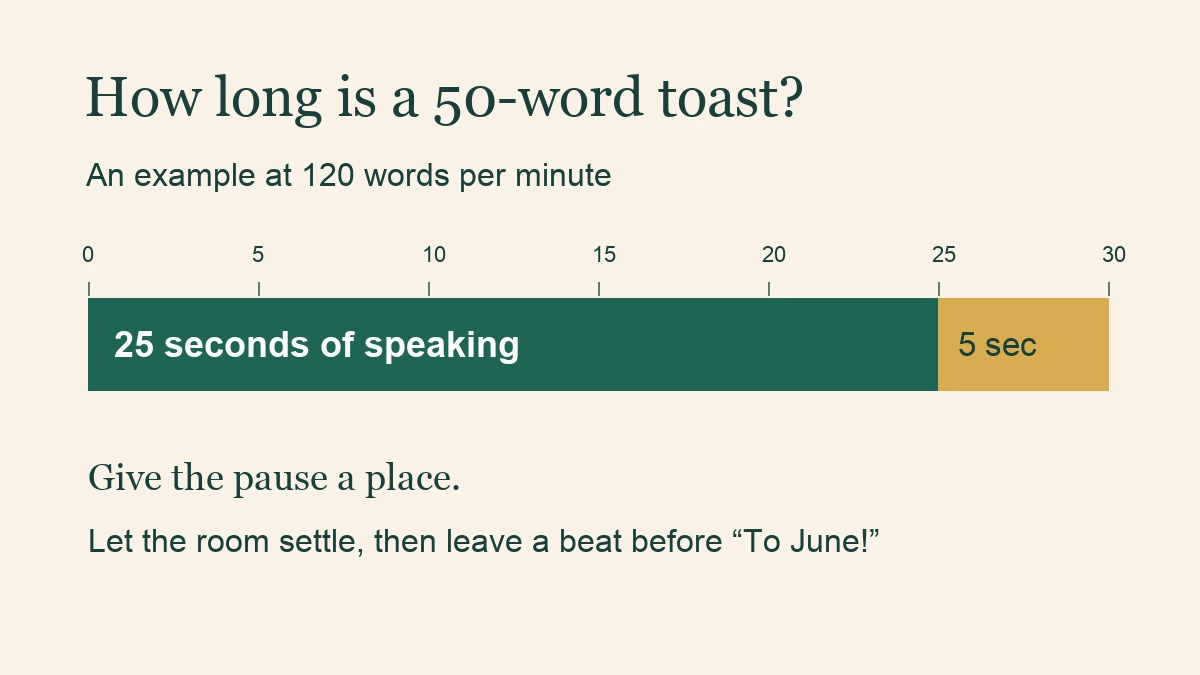
If you’re on the spot right now, try this: “To June. You found a chair for everyone who came through that door tonight. Here’s to you, and to many more dinners at your table.” Swap in your host’s name and one thing they really did.
If you have a few minutes before dinner or the office party, try one of the two examples below. Read it aloud once. Keep the line that sounds like someone you know.
The method
Think of the person you want to thank. Picture one moment you could point to if someone asked why.
“To [person or team].” Pause so people can turn toward them.
“I’ll remember when you [one thing they did].” Choose a detail a guest can enjoy even if they missed the moment.
“Here’s to [what you wish them or want to celebrate].” Say the name again if that feels more natural.
Imagine the plates arriving a sentence early. Jump straight from the detail to your last line. If it still makes sense, you have a short version ready.
“To Aunt June. When the doorbell rang and two extra people walked in, you brought out the folding chairs before they could ask if there was room. I grew up thinking everyone kept spare chairs by the door. I know now that was you. Here’s to June, who always makes room.”
If food is arriving, cut both sentences about growing up. The folding chairs already show June’s generosity. For your own host, the telling detail might be a plate kept warm for the last person off shift.
“To the early crew. On our first morning in the new shop, the sign was still on the floor and three customers were already outside. Jo found the tape, Sam held the ladder, and somebody put the kettle on. I’d open those doors with you any day. To the crew!”
If the room gets loud, drop the sentence about opening the doors again. Finish with “To the crew!” If you’re thanking a bigger team, choose a shared moment that includes people working behind the scenes.
At 120 words per minute, 50 words take 25 seconds. That leaves five seconds in a half-minute slot for people to turn toward the speaker and for a pause before the last line. Your pace may differ.
Paste your version into the calculator and choose your speaking pace. Then stand up and time it aloud, including the pause. If you go over, cut the sentence that explains the story and try again.
Toastmasters writer Eddie Rice recommends keeping a holiday toast brief and choosing a memory the room can share. A late train that somebody waited for works well. A private family joke that takes a minute to explain can wait until dessert.
For another rehearsal, WiseTom is our app. Start with the short-speech course goal and make it yours, for example, “Help me thank my aunt for hosting. I have the folding-chair story, but I keep explaining the ending.”
Eddie Rice on giving a holiday toast, Toastmasters International
Put it into practice
Reading a guide is a start. WiseTom turns what brought you here into a course that checks you understood and brings ideas back before they fade, so it sticks. Learn at your own pace. WiseTom is our app.


Want new features first?
Questions
Thank the host for something you can see. “To Priya, who moved half her living room so we could all sit at one table. Here’s to Priya!” A single true detail is enough.
At 120 words per minute, half a minute holds 60 words of uninterrupted speech. A 50-word draft leaves about five seconds for pauses. Time your own delivery to check.
Pick something you saw yourself. Thank the people who covered the desk so everyone could take a break, or who stayed to stack chairs. A small, accurate thank-you works even on your first week.
Look at the person you’re thanking and say the last line. “Here’s to June!” gives the room a natural place to join in, even if you skipped half the story.
See it in concrete terms
Choose the part you want to rehearse for your own occasion.
Method
We wrote two fictional toasts, each with a detail a listener can picture and an optional cut. Eddie Rice’s guidance informed our choice of a short, shared story.
Limits of this review: Speaking time varies with pace and pauses. Rehearsing your own words aloud gives you a better estimate for your table or team.

Continue in WiseTom
Use the article now. If you want to go further, WiseTom can turn the problem or curiosity behind it into a structured course. WiseTom is our app.
Want new features first?